
For civil contractors operating across South East Queensland, fleet strategy is no longer just an operational decision. It is a capital allocation decision, a margin protection decision, and increasingly, a compliance risk decision.
As project timelines become more fluid and tier-level site requirements continue to tighten, many contractors are reassessing the long-held assumption that owning heavy machinery creates control. For Lloyd, Managing Director and Founder of earth gear, the market is moving toward a more agile model: late-model equipment available when the project requires it, without tying up capital in depreciating assets between contract cycles.
In this interview, Lloyd discusses why the shift from heavy plant ownership to on-demand dry hire is becoming a stronger commercial strategy for Tier 1 and Tier 2 contractors across Brisbane and South East Queensland.
Q1. The Financial Pivot: CapEx vs. OpEx
Lloyd, shifting from owning a fleet to an on-demand mobilisation model is ultimately a balance sheet strategy. From a pure capital allocation standpoint, why is heavy machinery ownership increasingly viewed as an inefficient use of working capital for modern civil contractors?
Heavy machinery ownership only makes financial sense when utilisation is consistently high, predictable, and aligned with the contractor’s project pipeline. That is becoming harder to guarantee.
For many civil contractors, capital is better deployed into areas that directly improve project delivery, tender competitiveness, bonding capacity, working capital flexibility, and the ability to take on larger packages of work. When a contractor ties significant capital into excavators, loaders, rollers, trucks, and attachments, that capital is locked into depreciating assets that may not be generating revenue every week.
The issue is not whether the machinery has value. The issue is whether owning it is the most efficient use of capital in a project environment where scope, timing, access, and sequencing can all shift.
A dry hire model converts that fixed capital burden into a variable-cost structure. Instead of carrying the asset lifecycle on the balance sheet, contractors can align equipment cost more closely with project activity. That gives project managers and commercial teams more agility. They can bring in the right machine for the right stage of works, release it when the package changes, and avoid having cash tied up in plant that is not actively contributing to revenue.
From a strategic standpoint, the conversation is moving away from “Do we own enough gear?” and toward “How efficiently can we mobilise capability without weakening the balance sheet?” That is where on-demand fleet access becomes commercially powerful.
Q2. Factoring the True Cost of Asset Retention
When a Tier 1 or Tier 2 firm is modeling project margins, they look at machine utilisation rates. Where do asset-heavy contractors typically miscalculate the hidden carrying costs of maintaining an underutilised, owned excavator fleet during project gaps?
Utilisation is often assessed too narrowly. A machine may look viable on paper if the contractor is only considering the original purchase cost, expected resale value, and active working hours. But the true cost of retention sits in everything that happens when the machine is not generating revenue.
Idle gear still carries cost. There is storage. There is financing interest. There is depreciation. There are insurance obligations. There are maintenance routines that do not stop just because the machine is parked. There are internal workshop costs, specialist mechanics, parts availability, and compliance inspections that must be maintained if the machine is expected to return to work at short notice.
The other issue is management attention. Owned fleets require systems, people, and processes. Someone has to track servicing, defects, telematics, transport, attachments, compliance documentation, and machine readiness. That overhead is easy to underestimate because it is often spread across operations rather than isolated as a true fleet retention cost.
For an asset-heavy contractor, the danger is assuming an idle machine is simply waiting for the next job. Commercially, it is still consuming margin. If project gaps widen or contract awards are delayed, that retained fleet becomes a drag on working capital.
A hire model changes that equation. The contractor is not paying to preserve optionality through asset ownership. They are accessing capability when the project requires it, without absorbing the full cost of keeping that capability dormant between major packages of work.
Q3. De-Risking Project Variance and Delays
Civil project timelines in South East Queensland are notoriously fluid due to regulatory approvals, weather, or supply chain bottlenecks. How does an on-demand dry hire model protect a contractor’s bottom line against project variance compared to having owned assets sitting stagnant on a delayed site?
Project variance is one of the biggest reasons contractors are looking more closely at flexible fleet models.
In civil construction, the planned program and the live program are rarely identical. Approvals shift. Site access changes. Weather affects staging. Materials arrive late. Subcontractor sequencing moves. A project may still be commercially strong, but the timing of plant requirements can change significantly.
If a contractor owns the assets, the cost profile remains relatively fixed even when revenue activity pauses. The excavator, loader, roller, or dumper is still sitting inside the contractor’s cost base. If that machine is allocated to a delayed site, it may also be unavailable for other work without creating additional internal coordination issues.
With dry hire, the cost can be matched more closely to the operational requirement. Contractors can scale up when the program accelerates, scale down when a package pauses, and adjust the fleet mix as the workfront changes. That protects margins because equipment spend is tied to active need rather than ownership obligation.
The benefit is not just cost reduction. It is commercial control. A variable-cost fleet model gives contractors more room to respond to project uncertainty without carrying the full financial penalty of stagnant assets.
In a market like South East Queensland, where civil programs are often influenced by weather windows, council approvals, infrastructure staging, and supply chain timing, that flexibility can make a meaningful difference to project margin.
Q4. Overcoming the Asset-Aging and Compliance Trap
Tier 1 sites have uncompromising standards for machine age, emissions, and safety telematics. If a contractor relies on a legacy, owned fleet, they face massive reinvestment cycles just to stay compliant. How does earth gear’s mobilisation model absorb that tech-obsolescence risk for your clients?
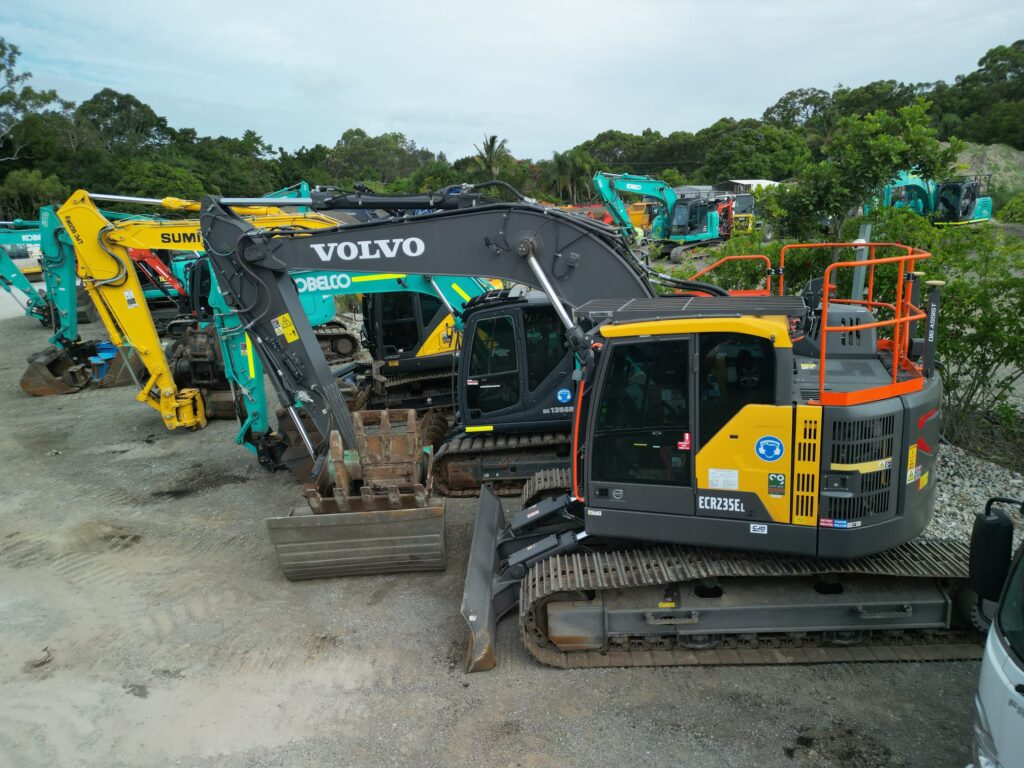
The compliance burden around heavy plant is only moving in one direction. Tier 1 and Tier 2 sites increasingly expect late-model machinery, strong safety documentation, reliable telematics, emissions alignment, and site-ready compliance records. A legacy fleet can quickly become a commercial constraint, even if the machine still performs mechanically.
That is the trap with ownership. A contractor may have reliable machines, but if those assets no longer meet the expectations of a major site, they face a reinvestment decision. They either commit more capital into fleet renewal or risk limiting the type of projects they can support.
earth gear absorbs a large part of that lifecycle pressure for clients. Our model is built around maintaining a low-hour, late-model fleet that is ready for civil and infrastructure environments. That means contractors can access machines that align with current site expectations without carrying the reinvestment cycle themselves.
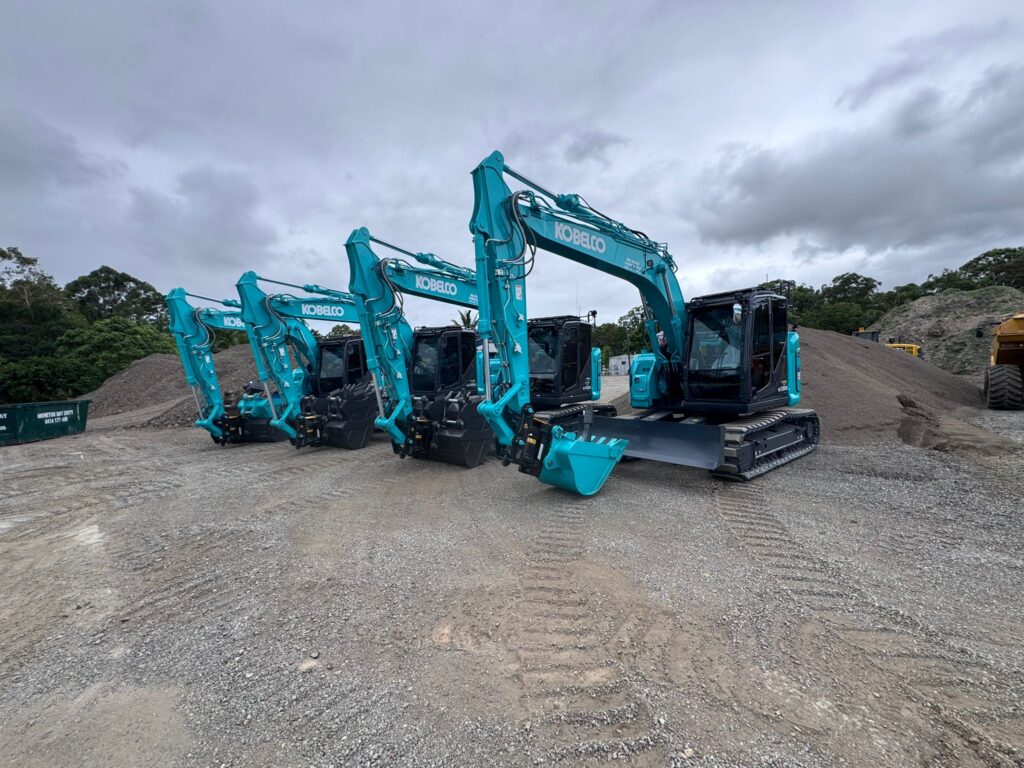
This is particularly important for contractors working across regulated projects where machine readiness is not just about availability. It is about documentation, safety, presentation, telemetry, and confidence at onboarding. When the site standard is high, turning up with the right gear matters.
For clients, the value is that they are outsourcing the asset-aging risk. They can continue to meet project and procurement expectations without committing their own balance sheet to constant fleet replacement. That allows them to stay operationally competitive while keeping capital available for the parts of the business that directly drive growth.
Q5. Seamless Logistics in Metropolitan Hubs
Mobilisation isn’t just financial. It’s heavily logistical. Navigating the transport, permitting, and rapid deployment of heavy earthmoving gear into tight metropolitan Brisbane corridors is highly complex. How does relying on a localised, strategic partner simplify the physical mobilisation process for large-scale projects?
Fleet strategy only works if the logistics behind it are dependable. On major projects, the machine is not useful simply because it exists in a yard. It has to arrive at the right site, at the right time, with the right attachments, documentation, and transport coordination behind it.
Brisbane adds another layer of complexity. Metropolitan access, delivery timing, traffic corridors, tight site entries, staging restrictions, and project-specific requirements all affect mobilisation. A contractor managing multiple workfronts does not need uncertainty around whether the machine can physically get there when the program requires it.
That is where a localised partner makes a significant difference. earth gear understands South East Queensland routing, project access expectations, and the practical realities of moving heavy equipment into active civil environments. We are not just supplying machines. We are coordinating availability, transport, attachments, timing, and readiness around the way civil projects actually run.
For Brisbane-based projects, our specialised approach to excavator hire brisbane gives civil project managers access to late-model equipment backed by local fleet coordination and responsive deployment. That reduces transport friction, improves planning confidence, and gives site teams a clearer path from requirement to mobilisation.
The goal is to make fleet access feel predictable. When project conditions change, contractors need a partner who can respond quickly without adding complexity to the program. Local knowledge, fleet depth, and disciplined logistics are what make that possible.
Concluding Summary
The move from asset ownership to on-demand fleet mobilisation reflects a broader shift in how civil contractors are managing capital, risk, and operational flexibility.
For Lloyd, the strongest contractors are not necessarily the ones that own the most machinery. They are the ones that can mobilise the right capability at the right time while protecting balance sheet strength, reducing idle asset exposure, and meeting the compliance expectations of major project environments.
For Tier 1 and Tier 2 contractors across South East Queensland, dry hire is no longer just a procurement option. It is becoming a disciplined commercial model for managing project variance, preserving working capital, and keeping fleet capability aligned with the realities of modern civil construction.

 Copyright 2017-2025 All rights reserved.