
Pavers
Brief History of pavers
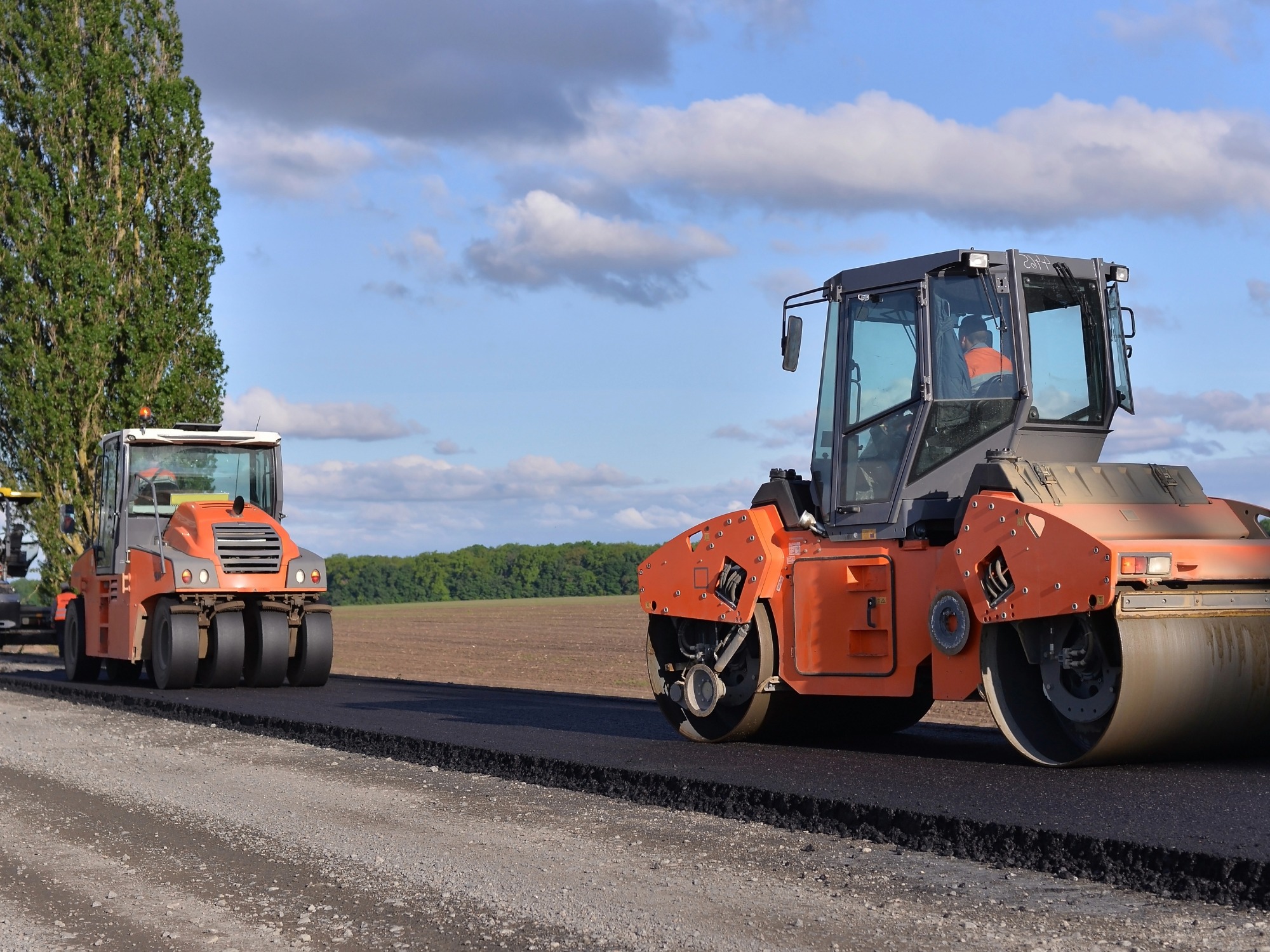
Modern paving machines trace their origins to the early 20th century, when road construction shifted from hand-laid surfaces to mechanized asphalt distribution. The first mechanical asphalt spreaders appeared in the 1930s, consisting of tractor-pulled units that dragged a screed to level the mix. In 1934, the Barber-Greene Company introduced the first self-propelled paver with a screw conveyor and floating screed, considered the ancestor of the contemporary asphalt paver.
Through the 1950s and 1960s, hydraulic control systems replaced manual adjustments, improving mat smoothness and layer uniformity. The introduction of augers, electric screed heating, and automatic grade-and-slope control further refined accuracy. Concrete slipform pavers also emerged during this period, allowing continuous casting of rigid pavements.
By the late 20th century, pavers incorporated electronic sensors, ultrasonic grade control, and integrated material-flow management. Today’s machines feature GPS, telematics, automatic thickness control, and low-emission engines, offering high production rates and consistent, high-quality surfaces across roadbuilding, airports, industrial sites, and municipal infrastructure.
Types of Pavers
Pavers can be grouped into several main categories based on the material they place (asphalt or concrete), the undercarriage they use (tracked or wheeled), and the type of project they serve, from compact municipal works to large highway and airport jobs; each machine is engineered to balance productivity, surface quality, and maneuverability in specific conditions, so understanding the main types helps match the right paver to the right application.
Tracked Asphalt Pavers

Tracked asphalt pavers use a rubber or steel-track undercarriage for stability and traction. They are the most common type used in large road projects where consistent speed and steady movement are essential for a smooth asphalt mat.
Key Characteristics
- Tracked Undercarriage – Provides excellent traction and low ground pressure, ideal for uneven or unpaved surfaces.
- Free-Floating Screed – Ensures smooth asphalt layers by averaging out minor surface variations.
- Material Flow System – Hopper, conveyors, and augers deliver consistent mix distribution.
- Wide Paving Widths – Supports large highways, runways, and long continuous paving operations.
- Precision Controls – Automatic grade and slope systems maintain thickness and profile.
Typical Applications
- Highway and freeway construction
- Airport runways and taxiways
- Large-scale resurfacing projects
- Industrial parks and logistics hubs
- Long-distance continuous paving
- Tracked pavers will continue to evolve toward hybrid drive systems, sensor-based autonomous controls, and data-driven quality monitoring.
Large-scale resurfacing projects
-
Industrial parks and logistics hubs
-
Long-distance continuous paving
Tracked pavers will continue to evolve toward hybrid drive systems, sensor-based autonomous controls, and data-driven quality monitoring.
Wheeled Asphalt Pavers
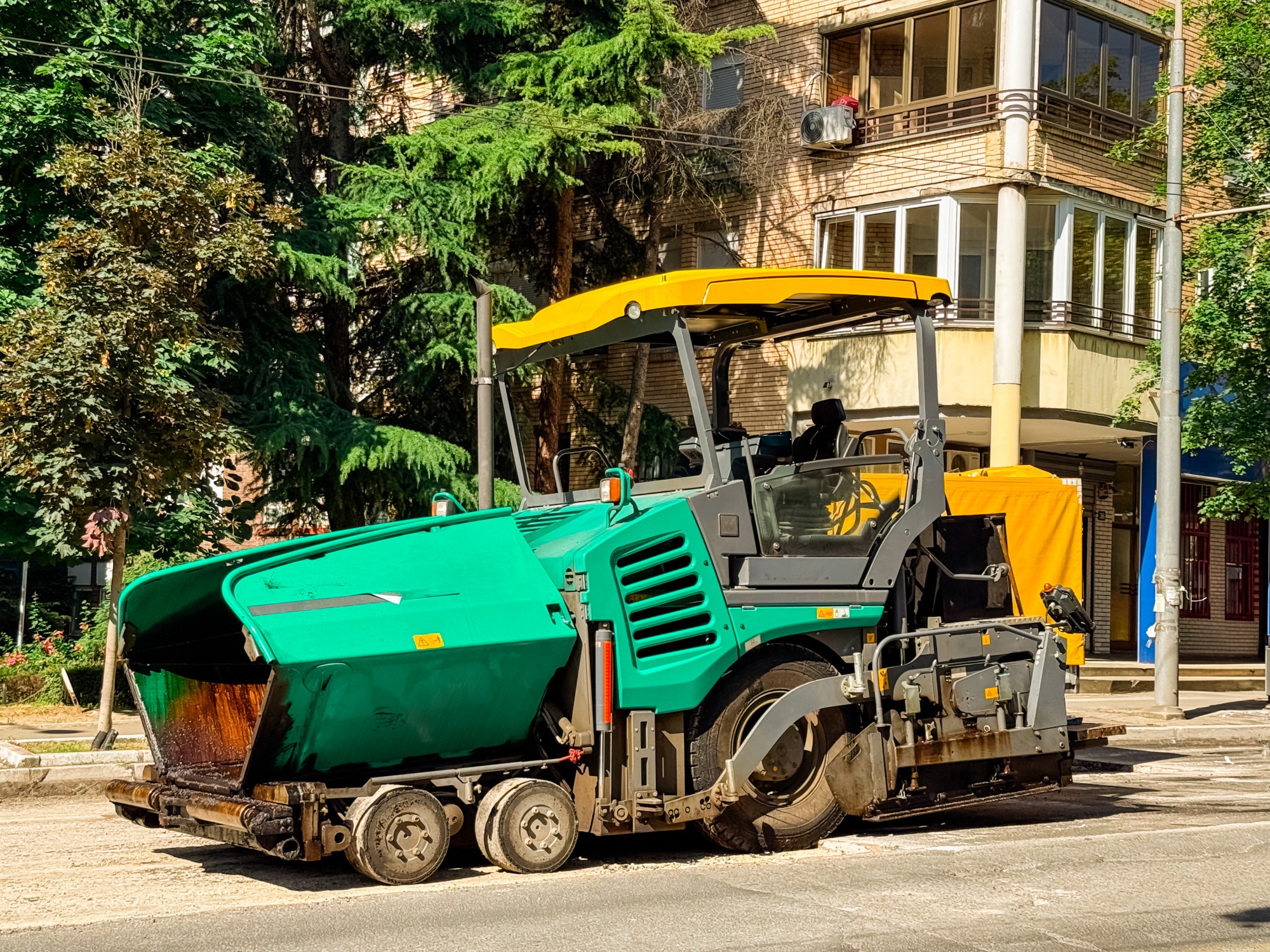
Wheeled pavers use rubber tires instead of tracks and are designed for paved or flat surfaces. They are faster to reposition and excel in urban environments.
Key Characteristics
- High Mobility – Faster travel speed and rapid jobsite repositioning.
- Surface Compatibility – Tires prevent damage to existing pavement.
- Compact for City Work – Ideal for narrow streets and urban utility projects.
- Stabilizers – Hydraulic screed extensions and optional front stabilizers improve stability during paving.
- Attachment Compatibility – Seamless integration of sensors, heated screeds, and edge-restraint tools.
Typical Applications
- Urban road construction
- Patching and municipal maintenance
- Parking lots and intersections
- Utility trench reinstatement
- Short-distance or high-traffic urban work zones
The main limitation is reduced stability and traction compared to tracked units on unpaved or uneven terrain.
Mini (Compact) Pavers

Compact pavers are small, lightweight machines designed for narrow spaces, small municipal projects, and light-duty paving. They typically work with asphalt, cold mix, or gravel.
Key Characteristics
- Small Footprint – Ideal for tight or confined job sites.
- Lightweight – Reduced ground impact on sidewalks or pedestrian areas.
- Easy Transport – Fits on small trailers for rapid mobilization between jobs.
- Low Operating Cost – Reduced fuel, maintenance, and staffing requirements.
- Versatile Screeds – Adjustable for narrow paths, cycle lanes, and small parking areas.
Typical Applications
- Sidewalks and cycle paths
- Small parking areas
- Urban repair work
- Landscaping projects
- Patchwork paving and trench reinstatement
- Municipal maintenance operations
- Compact pavers are especially popular in rental fleets due to their high utilization and broad applicability.
Curb and Gutter Pavers
These specialized machines are designed exclusively for producing curbs, edging, drainage channels, and narrow concrete profiles using slipform techniques.
Key Characteristics
- Interchangeable Molds – Allows different curb shapes, gutters, and drainage channels.
- Compact Design – Works efficiently in urban streets or residential zones.
- Precision Sensors – Ensures consistent line-and-grade over long distances.
- Low-Speed Accuracy – Extremely stable at slow pour rates.
Typical Applications
- Residential subdivision curbing
- Roadside gutters and drainage elements
- Sidewalk edging and median separators
- Utility channel construction
- Decorative urban profiles
Material Transfer Vehicles (MTVs) and Shuttle Buggies
While not pavers themselves, MTVs are integral to advanced paving operations by ensuring continuous, segregation-free asphalt supply.
Key Characteristics
- Continuous Material Flow – Prevents paver stops, improving mat smoothness.
- Thermal Management – Blends mix to maintain temperature consistency.
- High Capacity – Buffers trucks and pavers during high-production work.
- No Contact Delivery – Reduces paver wear and improves productivity.
Typical Applications
- High-quality asphalt highway construction
- Long-distance continuous paving
- Projects with strict density and smoothness requirements
Main models from leading manifacturers
Below are some notable paver models from global brands.
- Caterpillar (CAT) – AP600, AP1055, AP555
- Vögele (Wirtgen Group) – SUPER 1800-3i, SUPER 2000-3i, SUPER 3000-3
- Volvo Construction Equipment – P6820D, P7820D, P8820D
- Dynapac – SD2500CS, SD2550CS, F1000 series
- Bomag – BF 600 C, BF 700 C, BF 800 C
- LeeBoy – 8515C, 8616D, 8520B
- GOMACO – GP3, GP4, Commander III (slipform)
- Wirtgen – SP 94i, SP 64i (concrete slipform)
Models vary in paving width, engine power, hopper capacity, and compatibility with advanced grade-control systems.
Main Uses of Pavers
Pavers are used across the entire roadbuilding and infrastructure sector. Their primary applications include:
- Road and highway construction
- Airport runways and taxiways
- Industrial yards and logistics areas
- Urban streets and municipal resurfacing
- Parking lots and commercial developments
- Curbs, gutters, and concrete barriers
- Cycle paths and pedestrian areas
- Large-scale concrete pavements
- Maintenance, patching, and rehabilitation projects
They are essential for ensuring consistent, durable pavement surfaces in both asphalt and concrete applications.
In Summary
Pavers are highly specialized machines engineered to create uniform asphalt or concrete surfaces with precision, speed, and repeatability. From compact units that handle tight urban spaces to large tracked pavers used on highways and slipform machines that cast monolithic concrete slabs, each category is optimized for specific environments and production requirements.
Modern pavers integrate automation, advanced sensors, and telematics to achieve superior mat quality while reducing material waste and operational variability. Understanding the capabilities and applications of each type helps contractors, engineers, and fleet managers choose the right machine for their paving projects, ensuring long-lasting infrastructure and efficient site performance.
 Copyright 2017-2025 All rights reserved.